All case studies
Healthcare Mobile HIPAA · 2024

Where clinical trials lose patients. And how we won them back.

A patient-first mobile app for finding clinical trials and signing up for them. Built so the CRO reads the same form the patient filled out, instead of chasing it by phone.

  • Role Lead Product Designer
  • Timeline ~12 weeks
  • Team 1 designer · 2 CRO leads
  • Impact Replaces a scattered search and weeks of screening calls
Avallano TrialsConnect

01 Context

An inclusive, HIPAA-aware clinical-trial app for patients and CROs.

Clinical trials are essential for medical progress but are often hard to access, especially for marginalized groups. Many patients face trust issues, information gaps, and overly complex enrollment processes. TrialsConnect empowers users with personalized recommendations, transparent data sharing, and a supportive digital ecosystem, all while adhering to HIPAA guidelines.
02 Problem

Four barriers between patients and the trials they could join.

Patients face significant barriers in accessing and participating in clinical trials.

  1. 01

    Lack of Awareness

    Patients have difficulty finding trials relevant to their conditions due to scattered and non-personalized resources.

  2. 02

    Trust Issues

    Concerns about data misuse discourage participation.

  3. 03

    Complex Enrolment

    Existing processes are tedious and often exclude underrepresented communities.

  4. 04

    Recruitment Challenges for CROs

    Clinical research organisations face delays due to inefficient participant pre-qualification.

03 Project goal

What TrialsConnect set out to solve.

  1. 01

    Simplify the trial discovery and enrollment process.

  2. 02

    Build trust with secure, transparent data-sharing mechanisms.

  3. 03

    Create an inclusive and engaging platform.

  4. 04

    Improve recruitment efficiency for clinical research organizations.

Four product pillars

04 Research

A phased approach across domain, competitive, and stakeholder research.

Research Methodology

Our research approach was structured to build a deep understanding of the clinical trial landscape, regulatory requirements, existing solutions, and the perspectives of clinical research organizations. We followed a phased approach: Domain Research (Clinical Trials and HIPAA Compliance), Competitive Analysis, and Stakeholder Interviews.

  1. Phase 01

    Domain Research

    Clinical trials and HIPAA compliance.

  2. Phase 02

    Competitive Analysis

    Five active patient-recruitment platforms.

  3. Phase 03

    Stakeholder Interviews

    Two CRO representatives running live recruitment.

Domain Research · Clinical Trials and HIPAA Compliance

Before diving into stakeholder-specific research, we conducted thorough desk research on clinical trials and HIPAA regulations. This foundational step was crucial for:

  1. 01

    Understanding the Clinical Trial Process

    We researched the various phases of clinical trials, the roles of different stakeholders (patients, researchers, CROs, sponsors), and the typical challenges in trial recruitment and participation.

  2. 02

    Ensuring HIPAA Compliance

    We reviewed HIPAA guidelines and digital application standards to ensure that our design would prioritize data security and patient privacy. This included understanding requirements for data encryption, access control, user consent, audit trails, data minimization, and secure communication.

  3. 03

    Informing Subsequent Research

    This background knowledge allowed us to ask more informed questions during stakeholder interviews and critically evaluate existing solutions during the competitive analysis.

Competitive Analysis

I conducted a competitive analysis of existing platforms and solutions in the clinical trial recruitment space. This analysis helped us identify strengths and weaknesses among key competitors and define our unique value proposition for TrialsConnect.

Criteria
AutoCruitment Direct-to-patient digital outreach.
Antidote Healthcare partners build trust.
BBK Worldwide Long-standing recruitment expertise.
Science37 Decentralized, accessibility-first.
Medpace · TrialPACE Full-service CRO platform.
Strengths
  • 1,500+ digital channels for broad outreach.
  • Fast registration; clear next-step notifications.
  • Non-profit partnerships add credibility.
  • Tailored trial-match recommendations.
  • Deep recruitment experience and brand recognition.
  • Interactive outreach content.
  • Decentralized trials reach travel-limited patients.
  • Telemedicine and remote monitoring built in.
  • Flexible patient interface.
  • Sophisticated scheduling and reminders.
Weaknesses
  • UI overwhelming; thin personalization.
  • Cohesion gaps; navigation can frustrate.
  • Complex platform; dated UI; steep learning curve.
  • UI feels dated; mobile experience is limited.
  • Overloaded onboarding; cumbersome navigation; weak feedback loops.

Stakeholder Interview

Following the domain research and competitive analysis, we conducted semi-structured interviews with 2 stakeholders. Our participants included:

Participants

2 CRO Representatives

Professionals responsible for clinical trial recruitment and management. We aimed to get a wide range of perspectives from CROs of different sizes and specializations.

Interview Objectives

  1. 01 Understand the challenges patients face during trial enrollment.
  2. 02 Identify the needs of CROs in recruiting and managing clinical trials.
  3. 03 Explore current pain points in data security and trust.
  4. 04 Determine the level of customization expected for different patient groups.
  5. 05 Uncover the key features that the app must prioritize.

Interview Approach

  1. 01 We used a semi-structured interview format, starting with broad, open-ended questions and then probing deeper based on the participant's responses.
  2. 02 We focused on understanding the participant's experiences, motivations, and frustrations related to clinical trials.
  3. 03 We created a safe and welcoming environment to encourage participants to share their honest opinions and perspectives.

Key Insights from Stakeholders

  • 01

    Enrollment Challenges

    Patients struggle with understanding enrollment processes and eligibility criteria, which deters participation.

  • 02

    Barriers to Participation

    Common barriers include lack of awareness, safety concerns, and logistical issues such as travel.

  • 03

    Need for a Dedicated App

    There is a clear need for a dedicated clinical trial app to enhance access to information and improve the user experience.

  • 04

    Diverse User Motivations

    Users are motivated by factors such as seeking new treatments, financial incentives, and the desire to contribute to medical research.

  • 05

    Engagement Strategies

    Current communication methods are often insufficient; more interactive and personalized strategies are needed to keep participants engaged.

  • 06

    Data Security Concerns

    Addressing concerns about data security is crucial for building trust in the app among users.

05 Persona

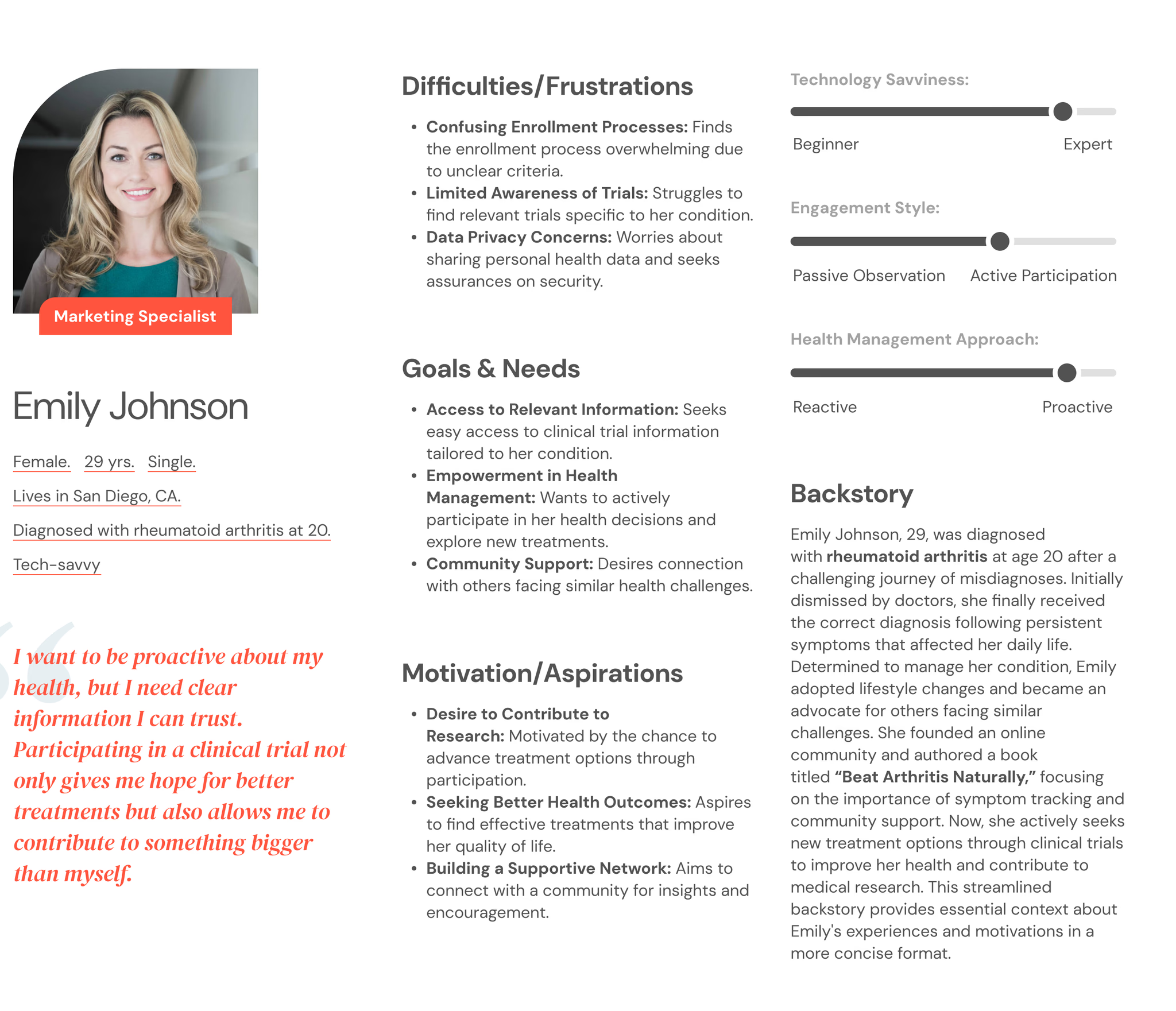
The patient TrialsConnect is built for.

Patient persona

06 Wireframes

Mapping seven flows in low-fidelity for fast stakeholder feedback.

Onboarding, trial discovery, and consent each got walked through in greyscale first. Cheap to redraw, fast to validate. Wireframes went in front of the CRO leads to test that the structure actually held before any visual investment.

Wireframes

07 Iterations

Two feedback-driven changes before the final designs.

The first home page was doing too much, and people couldn't tell what to look at first. Switched to a card layout so the important things are what the patient sees first.

Onboarding asked too many questions. Cut them down, and put a short note next to each one explaining why we needed it.

Design versions before finalising

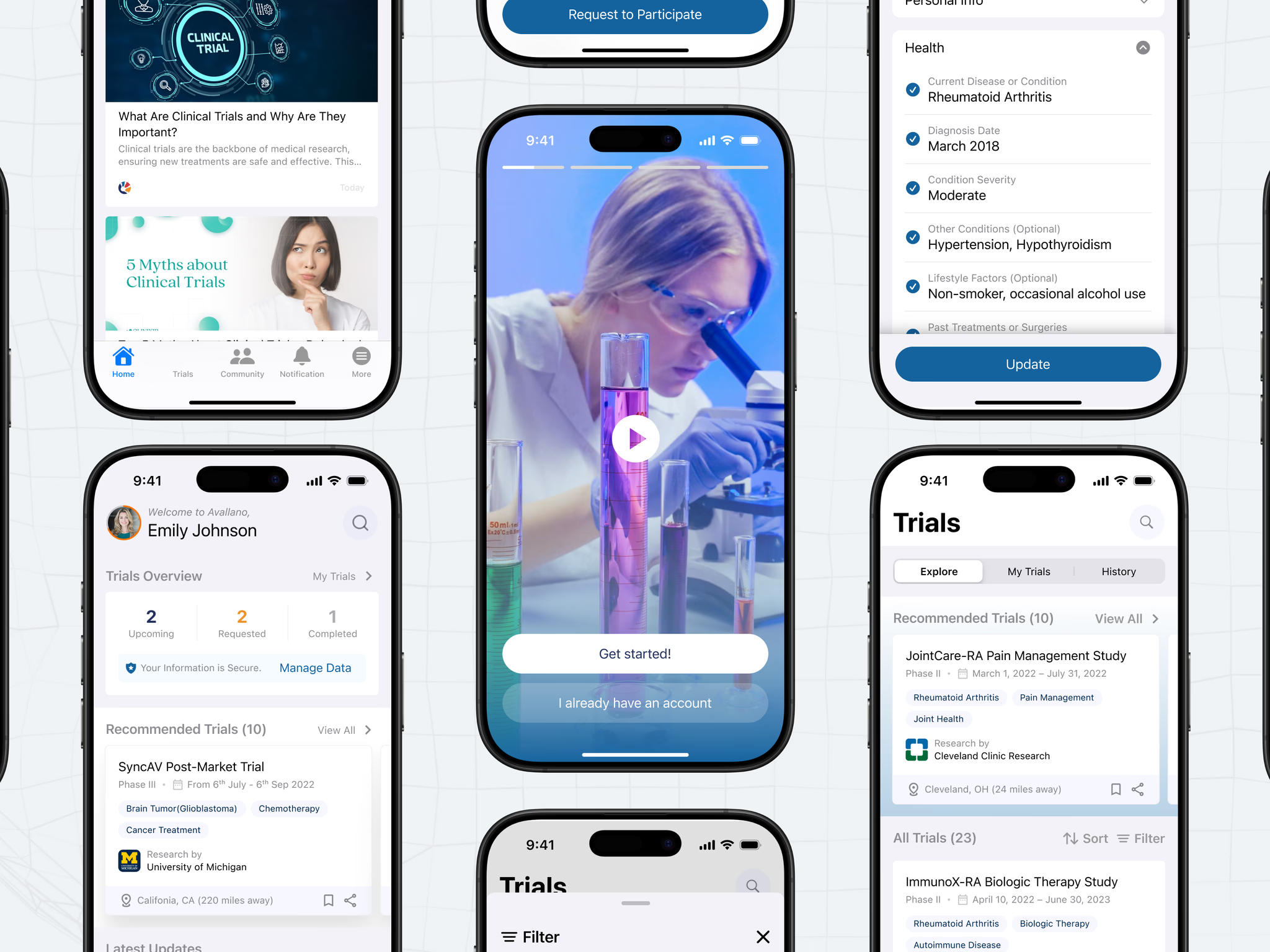
08 Final designs

Seven core flows across the patient journey.

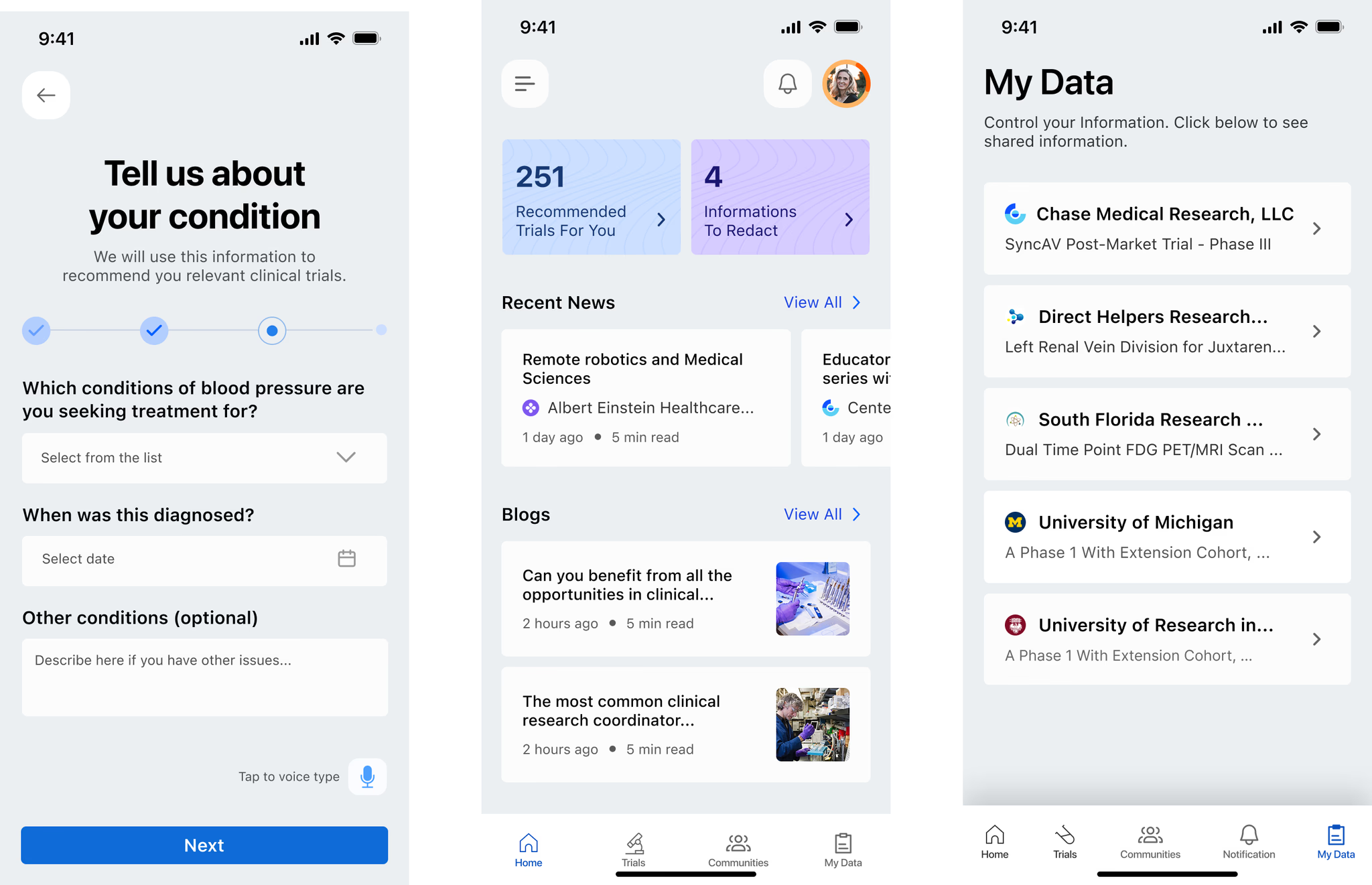
Login and onboarding flow
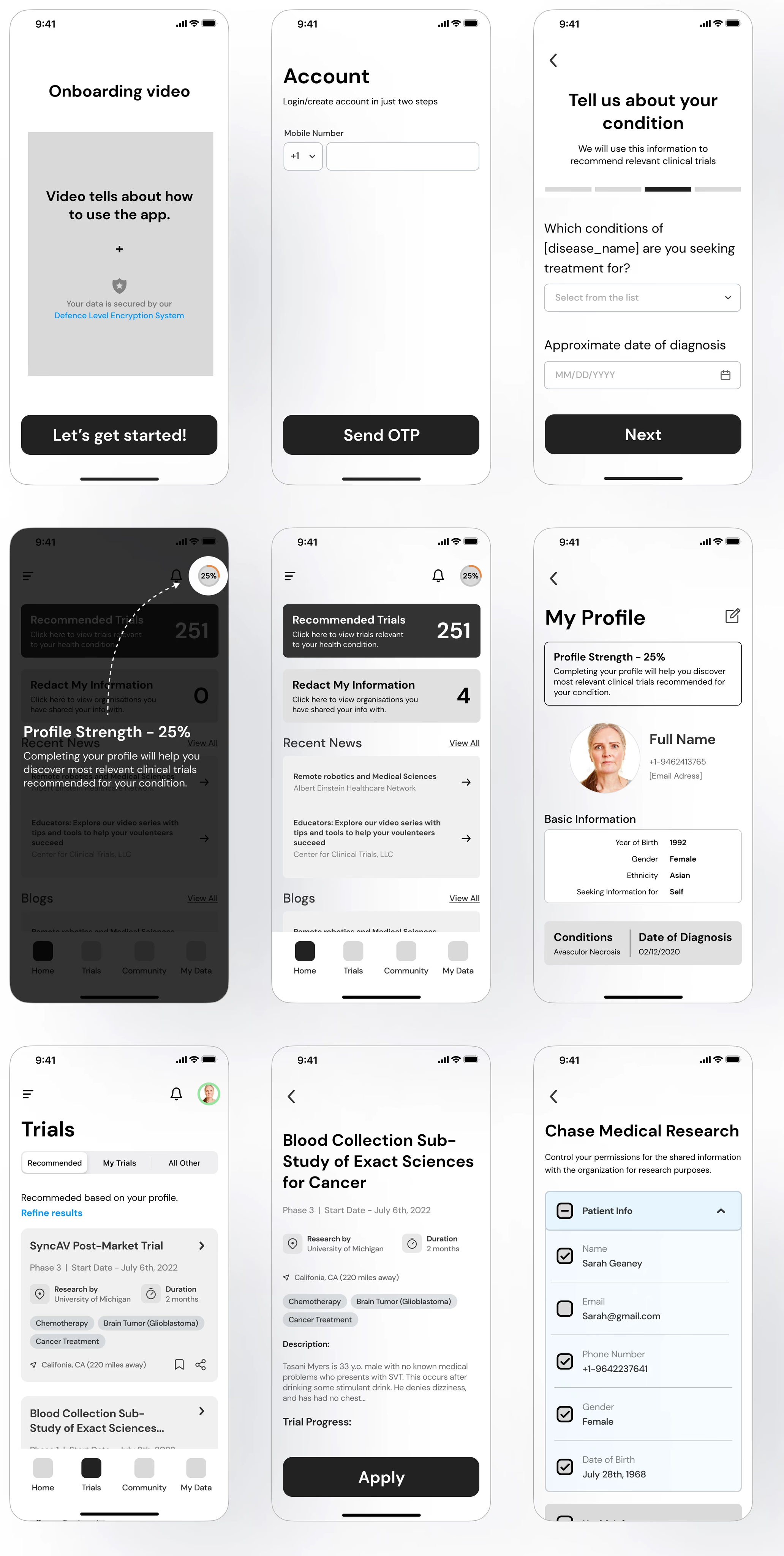
Login & Onboarding Splash screen, then short videos that walk through what the app does. New and returning users land in the same fast sign-in and get straight into something built around them.
Intake form flow
Intake Form Three quick steps: who the patient is helping, what the condition is, and a bit about who they are. Enough to start showing useful trials right away.
Homepage with personalized recommendations
Homepage Reminds the patient to finish their profile, puts trials and articles one tap away, and gives a quick read on where their active applications stand.
Trials list — recommendations, filters, my trials, history
Trials Recommended trials up top, filters for condition, location and phase, plus tabs for what the patient has applied to and a record of past activity.
Trial details — overview, phases, eligibility, compensation
Trial Details Everything the patient needs to decide: what the trial is, the phases, who can join, what they get paid, and how their data is handled. A summary modal sits between them and the application, so nothing gets sent off without reading.
Profile — completion indicator and data capture
Profile A small completion bar nudges patients to fill out the profile. The more they share, the better the trial matches get.
Manage my data — per-organization consent controls
Manage My Data Patients see which organizations have their data, and can hide specific fields or pull access entirely. HIPAA covered without making the user feel locked out of their own record.

09 Style guide

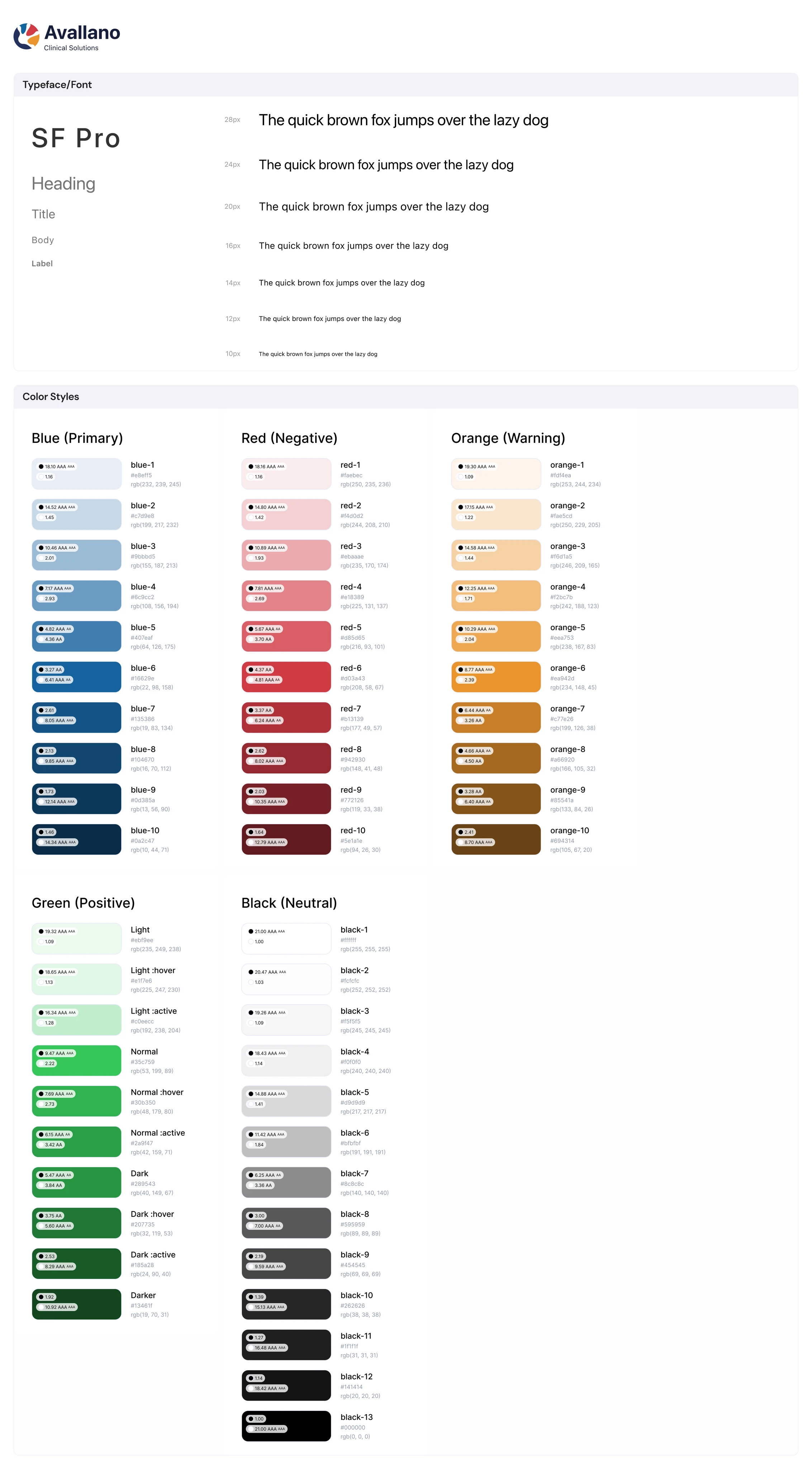
The visual language behind the product.

Style guide

10 Impact

Outcomes, challenges, and what I'd improve next time.

  • One flow

    Discovery, consent, and pre-qualification all in one app, instead of three.

  • Visible consent

    Patients can see what they've shared, who has it, and pull it back any time.

  • Intake that just works

    The form the patient fills out is the form the CRO reads. No retyping.

  • Faster screening

    What used to take weeks of phone calls now takes one review pass.

What I'd do next. Test the flow somewhere with real pressure on it: a waiting room, a clinic intake desk. We shipped a guided path because it was the cheaper call for v1, but a self-service version would probably cut the whole process down further.

How did this land

A quiet way to react. No account required.

Got more to say? Send a note →

Working on something similar

Want to talk about it?

Patient-facing apps, healthcare, anything that has to live inside HIPAA or similar rules. Happy to chat through what you're working on before you commit to anything.